
Where YOU get REAL Support and REAL Solutions
Defining Success Together
Autism and marriage aren't easy. We're here because we really get it.
REAL Neurodiverse Marriage
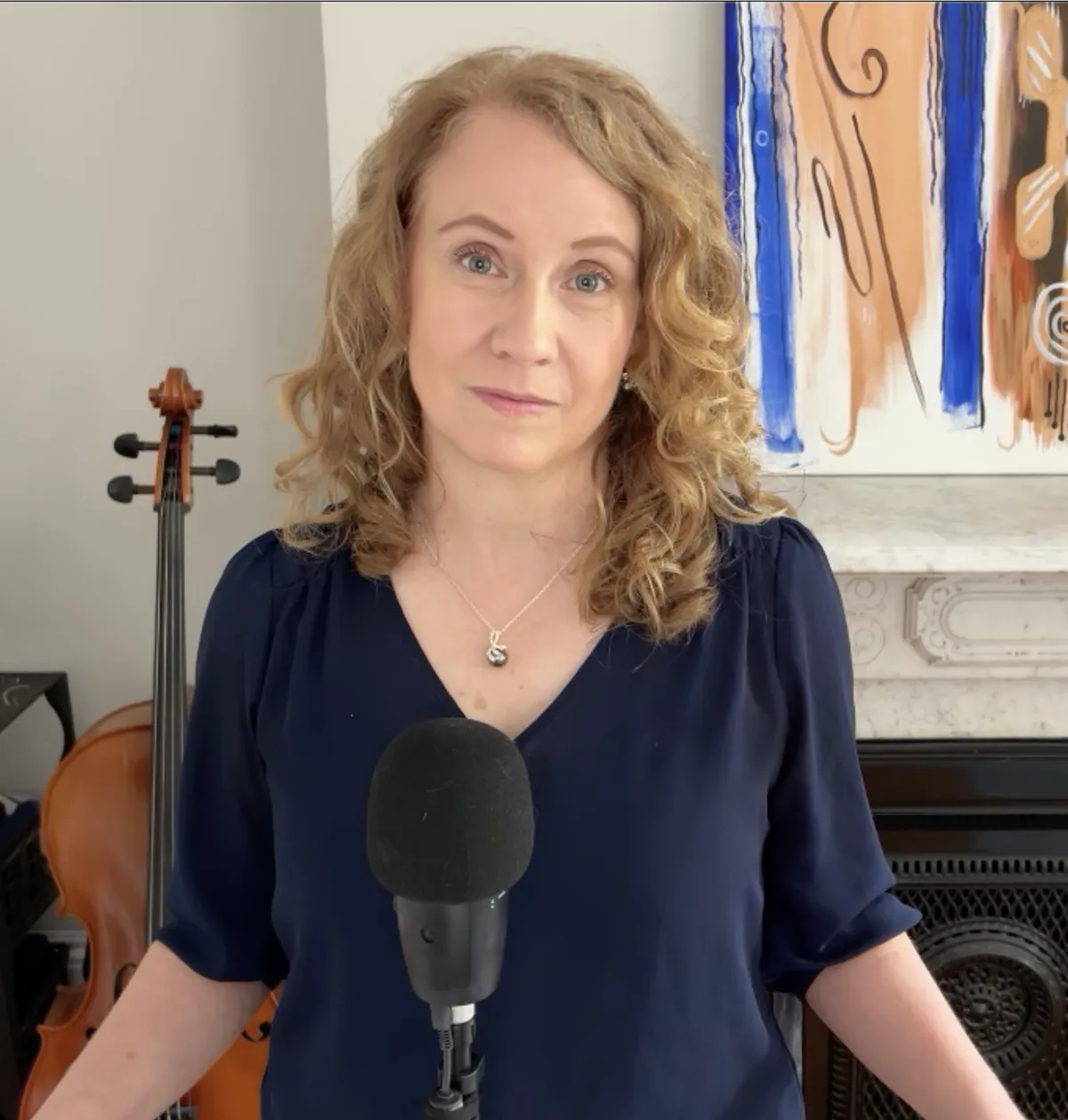
About Anne MacMillan
I built my original Neurodiverse Family Systems Theory on my education, personal life experience, and the professional experience I gained in the private neurodiverse services practice I founded in 2017.
Today, my services extend to support other professionals who have come to the new realization that neurodiversity is at the heart of many of the relationship challenges their adult clients face. Professionals can earn my Neurodiverse Family Systems Educator Credential (NFS-E) then use my practical 10-Step educational system, including quantitative assessments and support resources, to help their clients comprehend their relationship challenges and find the happiness and peace they deserve.
I have a research-based master's in psychology from Harvard University and studied developmental psychology as an undergrad. I received the Director's Thesis Award at Harvard for my original research on Level 1 autism and intimate life partnerships -- some of the first quantitative research on the subject in the world.
Altogether, I have over 50 years of personal life experience with neurodiverse family systems, over 20 years of personal life experience with neurodiverse intimate life partnerships, and 8 years of professional experience working with individuals managing the challenges of neurodiverse family systems.
I self-identify as a high body empathetic neurodivergent who just might also be a bit attention neurodivergent (ADHD). I am not autistic.

Anne MacMillan, MLA
Founder of the 10-Step Neurodiverse Family Systems Approach, Speaker, Researcher, Consultant, Coach, Educator and Expert Witness
Online Course Available Now
Married to Autism? Your Journey to Connection and Ease
An Online Course for Neurotypicals
and Non-Autistic Neurodivergents
Only $34.99 USD
Get the benefits of my education and life experience for less than the cost of one restaurant meal for two!
Neurodiverse relationships can be very confusing. Comprehending YOURSELF and the ways autism affects YOU can make all the difference. Take this first step towards
making life changes that will bring YOU the
Connection and Ease that YOU deserve.
Vicki R.

Found her insights spot on. I gifted this course to 2 others before I even finished it. Refreshing thoughts. Focus is on you, the NT of the relationship with great ways to look at things from both sides. Been married to Autism for 45 years and found this course something I will review on a regular basis to support myself.

Katie G.
This is a MUST for anyone who has a partner with autism. No matter where you are in your relationship, even if your relationship has ended, this is for YOU! Anne’s knowledge, compassion, guidance is unparalleled and unprecedented. Thank you Anne.
My Services
I offer consulting and coaching services to support you in achieving what you want from your life and for your partner, family and children. I work with either the autistic or the neurotypical partner.

Anne MacMillan, MLA
Founder of the R.E.A.L. 10-Step Neurodiverse Family Systems Approach, Speaker, Researcher, Educator, Consultant, Coach and Expert Witness
My Newest Blog Posts
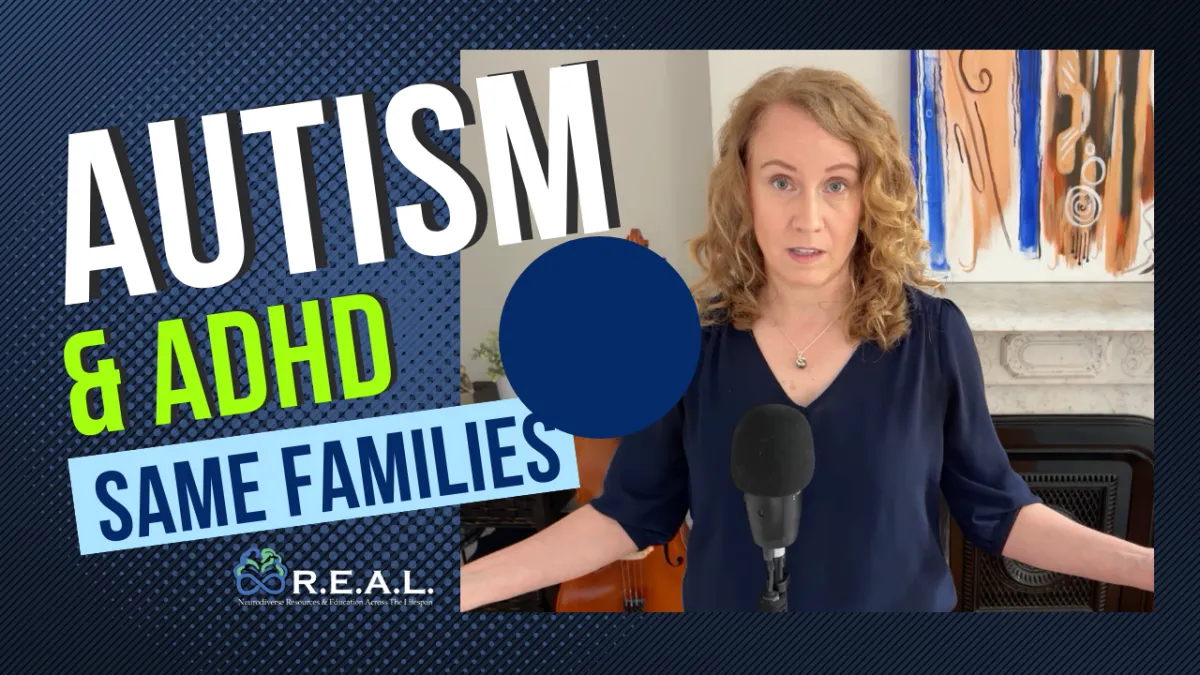
Neurodiverse Families and the Co-Occurrence of Autism and Attention Neurodivergence (ADHD): Insights from Recent Studies
Neurodiverse families often include various types of neurodivergence beyond autism. A significant 2017 study conducted by Ghirardi et al. sheds light on a crucial finding: autism (AS-ND) and attention neurodivergence (A-ND or ADHD) frequently co-occur within the same families. The study, which examined nearly 1.9 million individuals born in Sweden between 1987 and 2006, demonstrated that relatives of individuals with autism are more likely to have attention neurodivergence than individuals without such familial connections. This suggests a strong familial link between autism and attention neurodivergence, further reinforcing the understanding that neurodivergent variations often cluster within the same families.
One of the key takeaways from this research is that many autistic individuals are also diagnosed with ADHD. Despite this, it wasn't until 2013 that the American Psychiatric Association officially recognized the possibility of these two conditions co-occurring, allowing for dual diagnoses. Before this change, autistic individuals presenting with attention neurodiverence were often left with one diagnosis or the other, leaving gaps in their treatment and understanding of their neurological differences.
The 2017 study by Ghirardi et al. provided more than just clinical observations of co-aggregation; it inspired further research into the potential genetic links between autism and attention neurodivergence. This search led to a groundbreaking discovery in 2021 when Suk-ling Ma et al. identified a gene, SHANK2, that may play a key role in the overlap between these two neurodivergences. SHANK2 is thought to be a potential genetic marker underlying the co-occurrence of autism and attention neurodivergence within the same families.
The findings from these studies offer essential insights into the genetic and clinical dynamics of neurodiverse families. Not only do they demonstrate that autism and attention neurodivergence frequently co-occur, but they also highlight that while many autistic individuals may are also attention neurodivergents, this is not universally the case. The identification of SHANK2 as a potential genetic link opens new avenues for further research into the biological underpinnings of these neurodivergent variations.
Understanding the familial and genetic overlaps between autism and attention neurodivergence can help inform more personalized approaches to diagnosis and treatment, ensuring that individuals and families receive appropriate support for their unique neurodivergent profiles. As research continues to evolve, it is clear that the co-occurrence of different neurodivergences, such as autism and attention neurodivergence, is an important aspect of understanding neurodiverse family systems. By exploring these connections, we can better support individuals and families navigating the complexities of neurodivergence.
Ultimately, these studies serve as a reminder that neurodiversity is multifaceted, and families often face overlapping challenges that extend beyond a single neurological variation. The recognition and understanding of co-occurring neurodivergent qualities provide a foundation for more inclusive research, education, and interventions that reflect the true diversity of human neurology [2.1].
Resources for Further Exploration:
Read Ghirardi et al.'s 2017 study "The Familial Co-Aggregation of ASD and ADHD: A Register-Based Cohort Study" published by the Journal of Molecular Psychiatry, Feb. 2018 23(2), 257-262, doi:10.1038/mp.2017.17. Other authors: I. Brikell, R. Kuja-Halkola, C.M. Freitag, B.Franke, P. Asherson, P. Lichtenstein, and H. Larsson.
Read Suk-Ling Ma et al.'s 2021 research "Genetic Overlap Between Attention Defecit/Hyperactivity Disorder and Autism Spectrum Disorder in SHANK2 Gene" published by Fronteirs in Neuroscience, Vol. 15, doi:10.3389/fnins.2021.649588. Other authors: Lu Hua Chen, Chi-Chiu Lee, Kelly Y. C. Lai, Se-Fong Hung, Chun-Pan Tang, Ting-Pong Ho, Caroline Shea, Flora Mo, Timothy S.H. Mak, Pak-Chung Sham, and Patrick W. L. Leung.</text>
Learn more about the SHANK2 gene.
My Research
Some of the world's first quantitative research on autism and marriage
I was working on a master's in psychology at Harvard University when I realized my husband of almost 20 years was autistic. I was shocked by how little was known about an issue that affected my own life so dramatically. So, I shifted my research interests to autism and marriage and was ultimately given the Director's Thesis Award for my work.
My White Papers and Pamphlets
© 2024 R.E.A.L. Neurodiverse
All Rights Reserved
anne@REALneurodiverse.com
Text or Call: (617) 996-7239 (United States)